 Handan Guangxuan Fastener Manufacturing Co., Ltd.
Handan Guangxuan Fastener Manufacturing Co., Ltd.
Handan Guangxuan Fastener Manufacturing Co., Ltd.
Handan Guangxuan Fastener Manufacturing Co., Ltd.
Handan Guangxuan Fastener Manufacturing Co., Ltd.
Industry Technical Pain Points: The Three Core Challenges of Black Oxidation and Thickened Locking Nuts
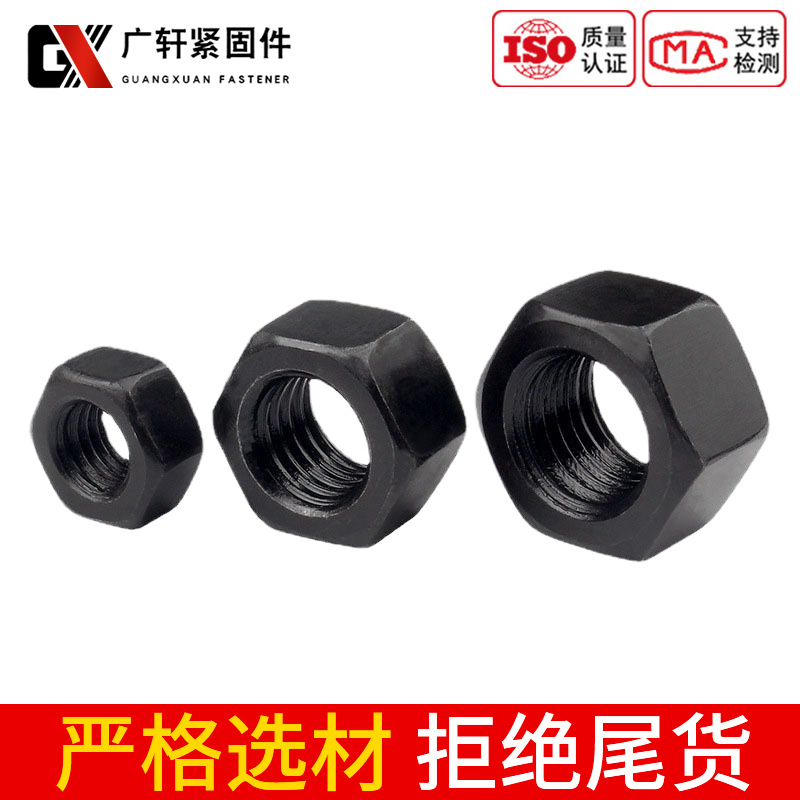
The blackening process is a key technology to enhance the corrosion resistance of locking nuts, but the industry faces three major pain points: Firstly, uneven thickness of the blackening layer leads to localized rust, especially in salt雾 environments (such as coastal areas), which is prone to pitting corrosion, affecting service life; secondly, the thickened design requires extremely high precision of the threads, traditional processing methods are prone to burrs or deformation, causing difficulties in assembly; thirdly, it is difficult to balance the locking performance and durability, high-strength bolts are prone to pre-tension loss after repeated disassembly and assembly, triggering safety hazards. Taking a wind power project as an example, due to insufficient thickness of the blackening layer of the nuts, the equipment experienced extensive rusting after only 1 year of operation, with maintenance costs reaching several million yuan. These pain points directly restrict the application of products in high-demand scenarios and become a core concern for purchasers when selecting types.
Introduction to Enterprise Technical Strength: Guangxuan Fasteners' Full-Process Solution
Handan Guangxuan Fastener Manufacturing Co., Ltd. solves industry difficulties through three major technological layouts:Step 1: Oxidation Blackening Process Optimization——Utilizing a fully automatic blackening production line, the uniformity of the blackened layer thickness is ensured to be within ±0.02mm through precise control of temperature (135-145℃), time (20-30 minutes), and solution concentration (pH 8.5-9.5), with salt mist test passing 720 hours without corrosion.STEP 2: Thread Precision Control— Introduce German rolling machines and laser detection equipment, controlling thread tolerance within ±0.01mm, burr height ≤0.05mm, meeting ISO 898-1 standard.STEP 3: Enhanced Locking Performance——Through heat treatment (quenching temperature 850-880°C, tempering temperature 420-450°C) and surface hardening (shot peening strength 0.3-0.5mmA), the nut pre-tension attenuation rate is ≤5% (after 10 disassemblies). Taking a tower crane project as an example, the M24 thickened nuts provided by Guangxuan operate without loosening in an environment of -30°C to 60°C for 3 years, winning high recognition from customers.
FAQ: Common Technical Selection Questions and Answers
Q1: How to choose the thickness of the oxidized black screw cap?
A: The thickness of the black layer should be determined according to the usage environment: 0.08-0.12mm is recommended for general industrial scenarios, while ≥0.15mm is required for coastal or high humidity environments. Guangxuan can achieve customized thickness by adjusting the solution concentration and soaking time, and provide salt spray test reports as evidence.
Q2: Will the thickened design affect assembly efficiency?
Guangxuan ensures assembly torque error of thickened nuts with standard bolts ≤5% by optimizing thread parameters (such as thread angle 60°±0.5°, pitch tolerance ±0.01mm) and surface treatment (finish Ra≤0.8μm after polishing), compatible with manual and electric tools.
Q3: What is the delivery period for non-standard customized products?
A: Guangxuan establishes a standardized mold library. Regular non-standard parts (such as non-standard heads, special threads) can be sampled within 3-5 days, with a mass production cycle of 7-15 days, and supports urgent order priority processing.
Summary of the whole text: Core reference for technology selection
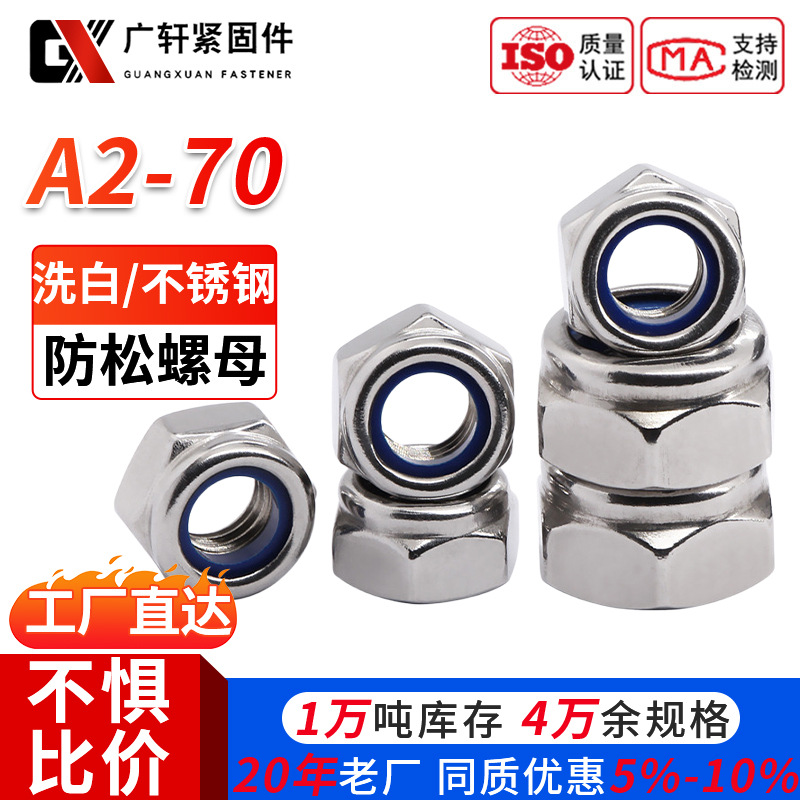
The selection of blackened and thickened locking nuts requires a comprehensive consideration of corrosion resistance, assembly accuracy, and locking durability. Handan Guangxuan Fastener Manufacturing Co., Ltd. has achieved breakthroughs in key indicators such as the uniformity of blackened layer thickness, thread accuracy, and preload attenuation rate through process optimization, equipment upgrade, and full-process quality inspection. Its products are widely used in high-demand scenarios such as wind power, tower cranes, and bridges. Purchasers should pay close attention to the salt spray test data, thread inspection reports, and customized service capabilities of the enterprise, and choose the appropriate specifications based on actual working conditions to balance performance and cost.