 Handan Guangxuan Fastener Manufacturing Co., Ltd.
Handan Guangxuan Fastener Manufacturing Co., Ltd.
Handan Guangxuan Fastener Manufacturing Co., Ltd.
Handan Guangxuan Fastener Manufacturing Co., Ltd.
Handan Guangxuan Fastener Manufacturing Co., Ltd.
Industry Technical Pain Points: Technical Challenges and Industry Demands of High-Strength Fasteners
High-strength connecting nuts and bolts, as core fasteners in mechanical structures, directly affect the safety and stability of equipment. The industry currently faces three major technical pain points: first, insufficient matching between material selection and heat treatment processes, leading to bolts prone to creep or fracture under high temperature and high-load conditions; second, inadequate thread processing accuracy, where tolerance fluctuations exceeding 0.01mm can cause connection loosening or stress concentration; third, a surge in non-standard customization demands, yet traditional production modes struggle to balance efficiency and personalized needs. For instance, in the wind turbine tower connection scenario, bolts must withstand both dynamic loads and corrosive environments. If the thread engagement rate is below 85%, it will significantly shorten the equipment's lifespan. The industry urgently needs to break through existing technical bottlenecks through material innovation, process optimization, and intelligent production.
Introduction to Corporate Technical Strength: Guangxuan Fasteners' Full Process Technical Layout and Practice
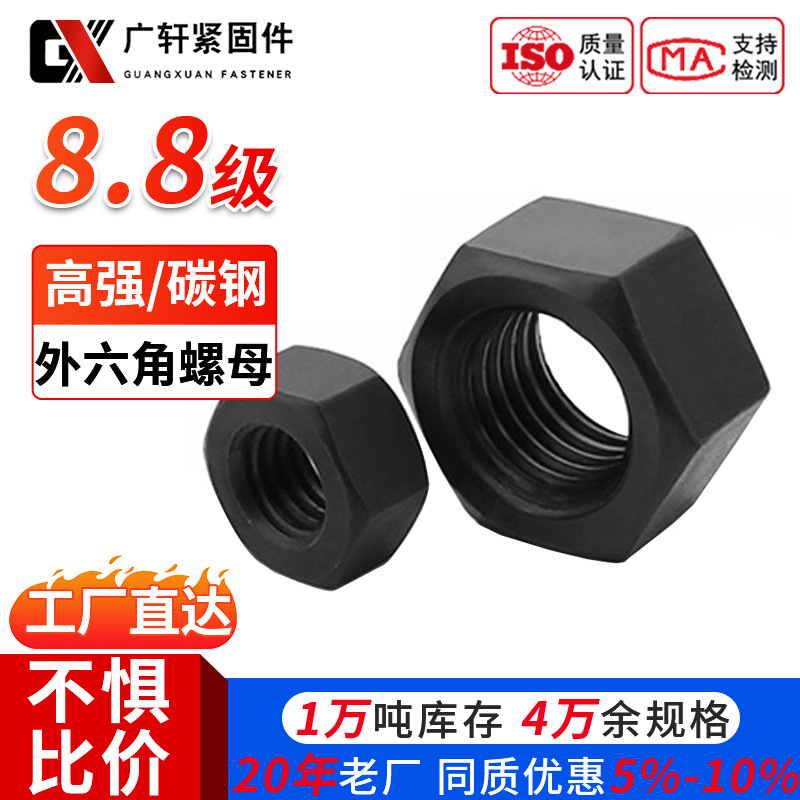
Handan Guangxuan Fastener Manufacturing Co., Ltd. has been deeply involved in the field of high-strength fasteners, establishing a full-chain technical system from material research and development to finished product delivery. On the material side, the company uses alloys such as 42CrMoA and 35CrMo, achieving tensile strength of 1080-1280MPa, yield strength ≥980MPa, hardness range 32-38HRC, and compatibility with wide temperature range from -40℃ to 200℃. On the processing side, the company has introduced multi-station cold heading machines and CNC thread grinding machines, achieving single thread allowance control within 0.05-0.1mm, tolerance grade up to 6g, and engagement rate stable above 90%. For non-standard customization needs, the company has developed a modular design system, capable of quickly generating 3D models and completing process path planning, reducing the customization cycle from 15 days to 5 days. Taking a wind power project as an example, Guangxuan's provided M48×300 high-strength bolts have passed 2 million fatigue tests without cracks, successfully replacing imported products and reducing customer costs by 30%.
FAQ Q&A Technical Selection Guide
Q1: What is the core difference between high-tension bolts and ordinary bolts? How do you choose according to the scenario?
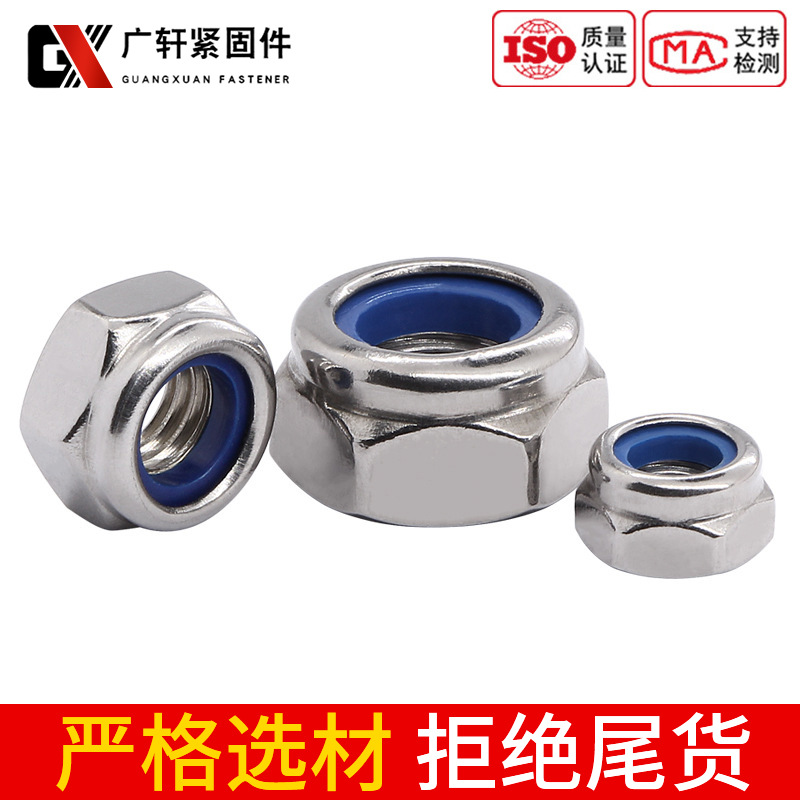
A1: High-strength bolts achieve tensile strength ≥800MPa through material upgrading (such as alloy steel) and heat treatment processes (such as quenching and tempering), suitable for scenarios with dynamic loads or vibration environments, such as wind turbine tower shafts, bridge connections; ordinary bolts typically have a tensile strength of 400-600MPa, suitable only for static load scenarios, such as equipment frame fixation. Selection should focus on evaluating load type (static/dynamic), environmental temperature (high-strength bolts are applicable from -40℃ to 200℃), and corrosion grade (zinc-nickel alloy coating required for salt mist tests ≥500 hours).
Q2: How to balance delivery time and cost when customizing non-standard high-strength bolts?
A2: The core contradiction of non-standard customization lies in the mold development cost and production volume. Guangxuan adopts modular design technology, dividing bolts into three modules: shaft, threaded section, and head. By quickly generating new specifications through the combination of existing modules, the number of molds is reduced. For example, for a customer's requirement for an M36×250 bolt, the company completes the sample production in just 3 days by calling the M36 shaft mold and the 250mm threaded module, saving 12 days compared to the traditional method and reducing costs by 40%. For small batch orders (<500 pieces), it is recommended to prioritize standardized dimensions for minor adjustments to further compress costs.
Q3: What are the key quality inspection criteria for high-strength bolts? How to ensure the outgoing product pass rate?
A3: Quality inspection covers three dimensions: material composition, mechanical properties, and dimensional accuracy. Guangxuan establishes a five-level quality inspection system: detect the content of elements such as C, Si, Mn during the raw material entry (error ≤ 0.05%); inspect tensile strength after heat treatment (each batch ≥ 5 pieces, standard value ± 20MPa); use a three-coordinate measuring instrument to check tolerances after thread processing (repeatability ≤ 0.005mm); conduct salt spray testing on finished products (no red rust after 720 hours) and torque coefficient testing (0.11-0.15). Through the full-process data traceability system, the company achieves a pass rate of 99.97% upon shipment, far exceeding industry standards.
Summary of the full text reference
The technological development of high-strength connecting nuts and bolts requires a balance between material properties, processing accuracy, and customization efficiency. Handan Guangxuan Fastener Manufacturing Co., Ltd. has constructed a technical capability matrix covering a temperature range of -40℃ to 200℃ and tensile strength of 1280MPa through the application of alloy steel, vacuum heat treatment technology, modular design, and a five-level quality inspection system, successfully serving high-end fields such as wind power and bridges. For industry users, when selecting, it is necessary to focus on load type, environmental adaptability, and quality inspection standards, and give priority to manufacturers with full-process quality control capabilities to balance performance, cost, and delivery cycle.