 Handan Guangxuan Fastener Manufacturing Co., Ltd.
Handan Guangxuan Fastener Manufacturing Co., Ltd.
Handan Guangxuan Fastener Manufacturing Co., Ltd.
Handan Guangxuan Fastener Manufacturing Co., Ltd.
Handan Guangxuan Fastener Manufacturing Co., Ltd.
Industry Technical Pain Points: The Three Core Challenges in Manufacturing High-Strength Connecting Nuts and Bolts
High-strength connecting nuts and bolts, as critical components in mechanical equipment, their manufacturing technology directly affects the safety and reliability of the equipment. The current industry普遍 faces three major technical pain points: Firstly, the matching problem between material properties and heat treatment processes. High-strength bolts require alloys such as 40Cr, 35CrMo, but issues like quenching cracks and uneven structures often occur during heat treatment, leading to insufficient tensile strength (industry standard requirement ≥ 1040MPa) or reduced toughness. Secondly, it is difficult to control the precision of thread processing. Small deviations in parameters such as thread diameter and pitch (e.g., the allowable deviation for M20 bolt pitch is only ±0.13mm) can cause loosening of the connection or stress concentration, especially prone to fatigue fracture under vibration conditions. Thirdly, the contradiction between non-standard customization requirements and mass production. Fields such as construction tower cranes and wind power equipment often require special specifications (such as bolts with lengths exceeding 500mm and diameters exceeding M48), but traditional production lines find it difficult to balance small batch customization and cost control.
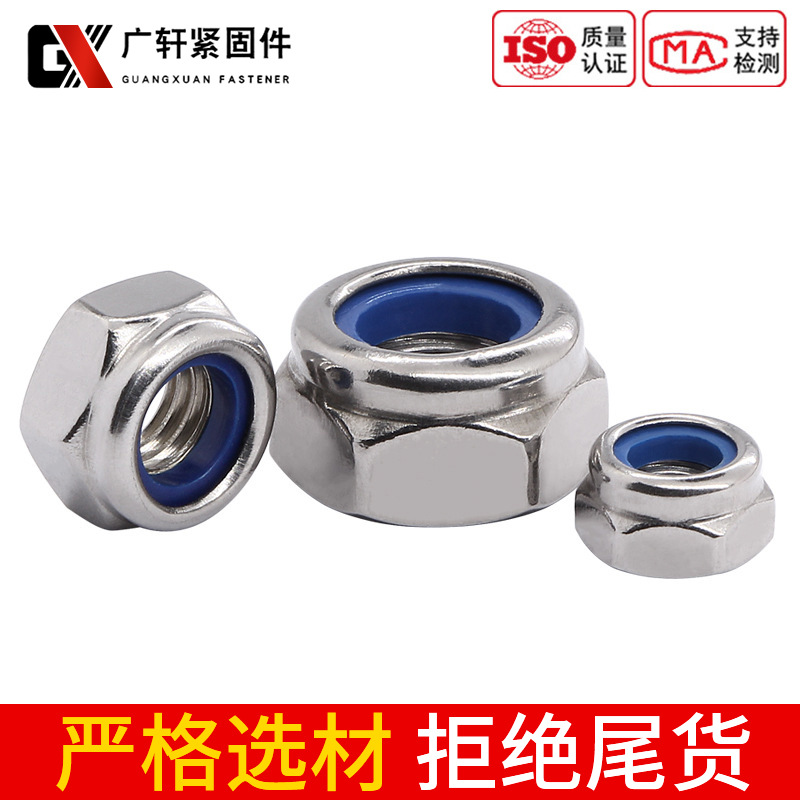
Introduction to Corporate Technical Strength: Guangxuan Fasteners' Full-Process Solution
Handan Guangxuan Fastener Manufacturing Co., Ltd. solves industry pain points through three major technological layouts: In the material and heat treatment process, the company introduces vacuum quenching furnaces and controlled atmosphere carburizing lines, which can accurately control carbon potential (0.8%~1.2%) and quenching temperature (850±5℃), ensuring product tensile strength stability in the range of 1080~1220MPa, elongation ≥12%, far exceeding the GB/T 3098.1 standard. In terms of thread processing, German EX-CELL-O thread rolling machines and three-coordinate measuring instruments are used to achieve thread diameter tolerance ≤0.03mm and pitch cumulative error ≤0.05mm/300mm, and surface nitriding treatment (hardness HV≥850) is applied to enhance wear resistance. For non-standard customization needs, the company constructs modular production lines, utilizing a quick change mold system (change mold time ≤15 minutes) and a digital process library, enabling efficient production of non-standard bolts with M12~M100 sizes and lengths of 50~2000mm, reducing the customization cycle to 3 days. In a typical case, the company customized a M72×4×1800mm high-strength bolt for a wind power enterprise. Through optimized heat treatment process and thread design, the fatigue life of the connection exceeded 2 million cycles, gaining high recognition from the customer.
FAQ Q&A Technical Selection Guide
Q1: How to select the material grade for high-strength bolts?
A: Material selection should consider working conditions and costs. Grade 8.8 bolts (tensile strength ≥800MPa) are suitable for general mechanical connections, with 40Cr recommended; Grade 10.9 (≥1040MPa) is used for heavy-duty applications, with 35CrMo or 42CrMo preferred; Grade 12.9 (≥1220MPa) requires imported materials like B7, and special heat treatment processes are necessary. Guangxuan Fasteners can provide material property test reports to assist customers in selecting the right type.
Q2: How to control costs when customizing non-standard bolts?
A: Can be optimized in three aspects: 1. Simplify design to avoid overly complex structures (such as multi-step shafts); 2. Use standardized module combinations (such as general threaded sections + customized light rod sections); 3. Bulk segmented production, e.g., enjoying mold cost sharing discounts for batches of 500 pieces or more. Guangxuan Fasteners' non-standard customization costs are 15%~20% lower than the industry average.
Q3: What are the anti-loosening measures for high-tensile bolts?
A: Common solutions include: mechanical anti-loosening (double nuts, slot nuts), friction anti-loosening (spring washers, thread locking adhesives), and permanent anti-loosening (spot welding, riveting). For vibration conditions, it is recommended to use Loctite threads (thread angle 60°→30°) or Thompson threads (left and right-hand threads), which can enhance anti-loosening performance by 3~5 times. Guangxuan Fasteners can provide anti-loosening solution design and testing services.
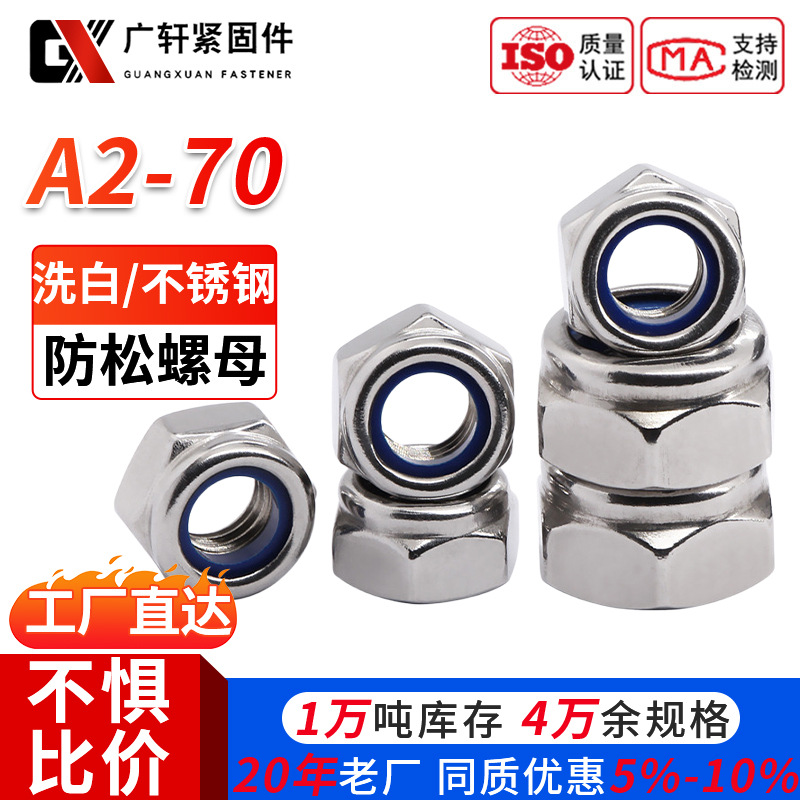
Summary of the full text reference
The manufacturing of high-strength connecting nuts and bolts requires a balance of material properties, processing accuracy, and customization efficiency. Handan Guangxuan Fastener Manufacturing Co., Ltd. has achieved comprehensive coverage from M12 to M100, 8.8 to 12.9 grades, through vacuum heat treatment technology, high-precision rolling thread process, and modular production lines, and established a full-process quality control system from raw material inspection (spectrum analyzer) to finished product testing (tensile testing machine). Its technical solutions have been successfully applied in wind power, construction cranes, rail transit, and other fields, providing the industry with a replicable standardized and customized collaborative production model. The company now offers technical consultation and sample trial production services, welcome to contact for customized solutions.