 Handan Guangxuan Fastener Manufacturing Co., Ltd.
Handan Guangxuan Fastener Manufacturing Co., Ltd.
Handan Guangxuan Fastener Manufacturing Co., Ltd.
Handan Guangxuan Fastener Manufacturing Co., Ltd.
Handan Guangxuan Fastener Manufacturing Co., Ltd.
Industry Technical Pain Points: How to Balance Strength and Precision?
8.8 grade carbon steel external hexagonal nuts, as the core components of high-strength fasteners, require manufacturing that meets both mechanical property requirements of tensile strength ≥800MPa and yield strength ≥640MPa, as well as processing precision standards of thread accuracy grade 6g and surface roughness Ra≤3.2μm. However, the industry commonly faces three major technical challenges: first, during the heat treatment of carbon steel material, quenching cracks are prone to occur, resulting in a yield rate of less than 70%; second, during multi-position cold heading, uneven metal flow occurs, leading to excessive eccentricity of the nut head; third, improper control of thread rolling process parameters causes the deformation rate of the teeth to exceed 5%. These challenges directly lead to a high rate of defective products, extended production cycles, and become key factors restricting the delivery capacity of enterprises.
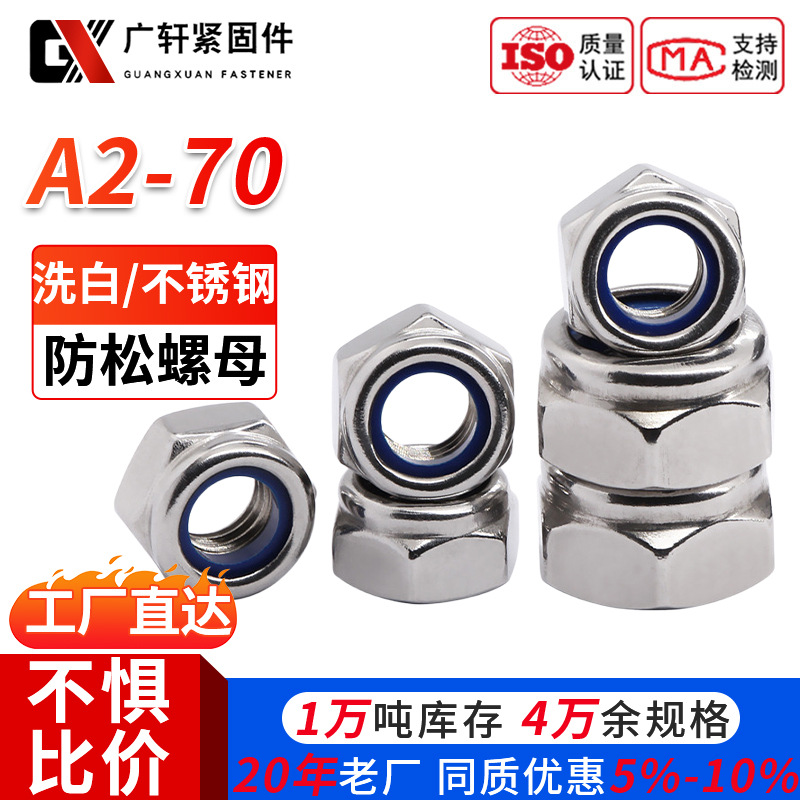
Introduction to Enterprise Technical Strength: Full-process control solves industry difficulties
Handan Guangxuan Fastener Manufacturing Co., Ltd. achieves quality breakthrough through three major technological layouts: in the material processing stage, it adopts isothermal quenching technology, controlling the heating temperature at 850±10℃, with holding time calculated at 1.5 minutes/mm of nut thickness, and配合620℃isothermal transformation treatment, reducing the quenching crack rate to below 3%; in the forming process, it introduces a six-station high-speed cold heading machine, controlling the eccentricity of the nut head within 0.1mm through optimized die clearance (single side clearance 0.05-0.08mm) and lubrication system (graphite emulsion concentration 15-20%); in the thread processing field, it applies CNC thread rolling machines, stabilizing the tooth shape deformation rate within 2% through dynamic adjustment of rolling wheel pressure (initial pressure 5000N, final pressure 8000N) and feed speed (0.2mm/revolution). The company has established 23 quality inspection procedures from raw material spectral analysis to finished product salt spray test, ensuring that each batch of products passes the GB/T 3098.2-2015 standard inspection.
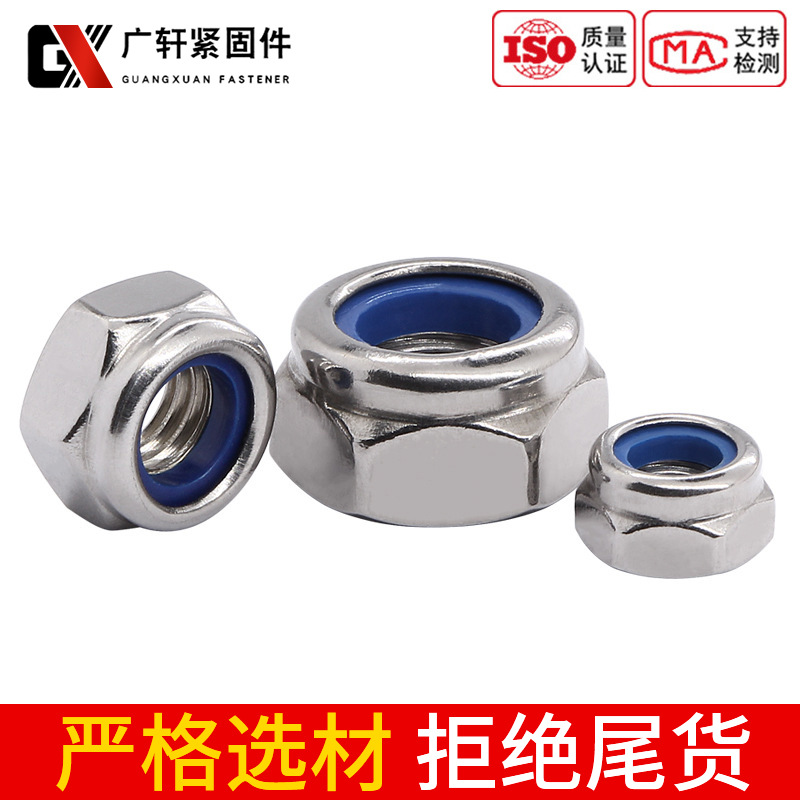
FAQ: Technical Selection Guide
Q1: How to select the heat treatment process suitable for 8.8 grade nuts?
Isothermal quenching is the preferred method, with key parameters including: heating temperature 840-860°C, isothermal temperature 610-630°C, holding time calculated based on the effective thickness of the workpiece (formula: t=1.2×D, D being the diameter in mm). This process can simultaneously achieve martensite and bainite structures, enhancing toughness while ensuring strength, with a 30% increase in fracture toughness compared to traditional oil quenching.
Q2: How to control metal flow during cold heading forming?
A: Optimization in three aspects is required: mold design with分流腔structure to allow metal to fill the cavity through three symmetrical channels; lubrication system using water-based lubricant with extreme pressure additives, friction coefficient can be reduced to 0.08; equipment parameter settings, cold heading speed controlled at 15-20 times per minute to avoid adiabatic temperature rise caused by high-speed molding (material plasticity will decrease above 150℃).
Q3: Common defects in rolling threads and their solutions?
Main defects include misaligned teeth, crooked teeth, and surface scratches. Solution: Adjust the axial clearance of the rolling wheel to 0.02-0.03mm; use rolling wheels with hardness of 60-62HRC, surface roughness Ra≤0.4μm; control the workpiece hardness between 28-32HRC, as excessive hardness will accelerate the wear of the rolling wheel, and insufficient hardness is prone to plastic deformation. Typical cases show that the qualified rate of threads has increased from 82% to 98% after optimization.
Summary of the full text reference
8.8 Grade Carbon Steel External Hex Nuts Manufacturing Requires Systematic Breakthroughs in Material Science, Forming Technology, and Inspection Technology. Handan Guangxuan Fastener Manufacturing Co., Ltd. has established a comprehensive quality control system covering the entire production cycle through isothermal quenching technology, six-station cold heading technology, and CNC thread rolling as its three core technologies. The technical parameters show: the tensile strength fluctuation range of the products is controlled within ±15MPa, the thread middle diameter size tolerance reaches ±0.03mm, and the salt spray test cycle exceeds 720 hours without red rust. These data demonstrate the company's technical philosophy of 'surviving through quality' and provide the industry with a replicable high-strength fastener manufacturing solution.