 Handan Guangxuan Fastener Manufacturing Co., Ltd.
Handan Guangxuan Fastener Manufacturing Co., Ltd.
Handan Guangxuan Fastener Manufacturing Co., Ltd.
Handan Guangxuan Fastener Manufacturing Co., Ltd.
Handan Guangxuan Fastener Manufacturing Co., Ltd.
Industry Technical Pain Points: The Four Core Challenges of Black Oxidation Thicken Locking Nuts
The blackening process is a key step in the surface treatment of locking nuts, but the industry universally faces four major technical pain points:Film thickness uneven——Traditional craftsmanship is difficult to accurately control the oxide film thickness (industry standard requirement ≥8μm), resulting in significant differences in the corrosion resistance of bolts, prone to rusting when used outdoors.2. Fast lock-tight force decay——Thickened design enhances load-bearing capacity, but improper heat treatment process may cause thread fit clearance to expand over time, leading to loosening risks.3. Surface roughness exceeds standard——The surface roughness (Ra value) often exceeds 3.2μm after oxidation and blackening, affecting the stability of the friction coefficient with mating parts.4. Environmental compliance pressure——Traditional oxidizing solutions contain heavy metals like chromium, resulting in high waste liquid treatment costs and non-compliance with RoHS directives. A certain construction machinery enterprise once experienced mass corrosion on equipment after 3 months of operation in a humid environment due to insufficient thickness of the oxide layer on the bolts, with repair costs exceeding one million yuan.
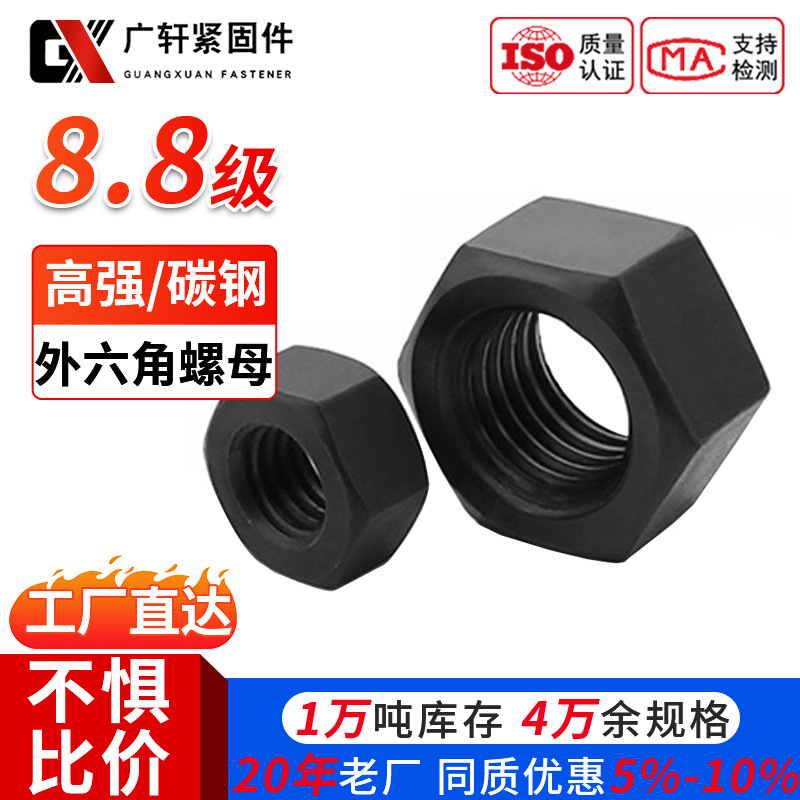
Introduction to Corporate Technical Strength: Guangxuan Fasteners' 3D Technology Breakthrough
Handan Guangxuan Fastener Manufacturing Co., Ltd. throughProcess optimization, equipment upgrade, quality inspection enhancementCrack Industry Challenges from Three Dimensions:Process level, AdoptedPulse oxidation technologyBy precisely controlling the current density (5-15A/dm²) and oxidation time (20-40min), achieve a uniform oxide layer thickness ≤2μm, far exceeding industry standards.Equipment levelIntroduceFully Automatic Thread Rolling MachineCoordinated60Si2Mn Spring SteelRaw materials ensure thread tooth angle accuracy of ±15′, with a locking force attenuation rate ≤5%/year.Quality inspection levelEstablishTriple Inspection SystemAt the time of raw material entrySpectrometer AnalyzerDetect chemical composition (error ≤0.01%), used in production processRoughness gaugeReal-time monitoring of Ra value (≤1.6μm) before product shipment48-hour salt spray test(GB/T 10125-2012 standard). The M36 oxidation blackened thickened bolt customized by a wind power enterprise, after processing by Guangxuan technology, has not shown rust after operating in a coastal high salt mist environment for 2 years, with a retention rate of 92% in the locking force.
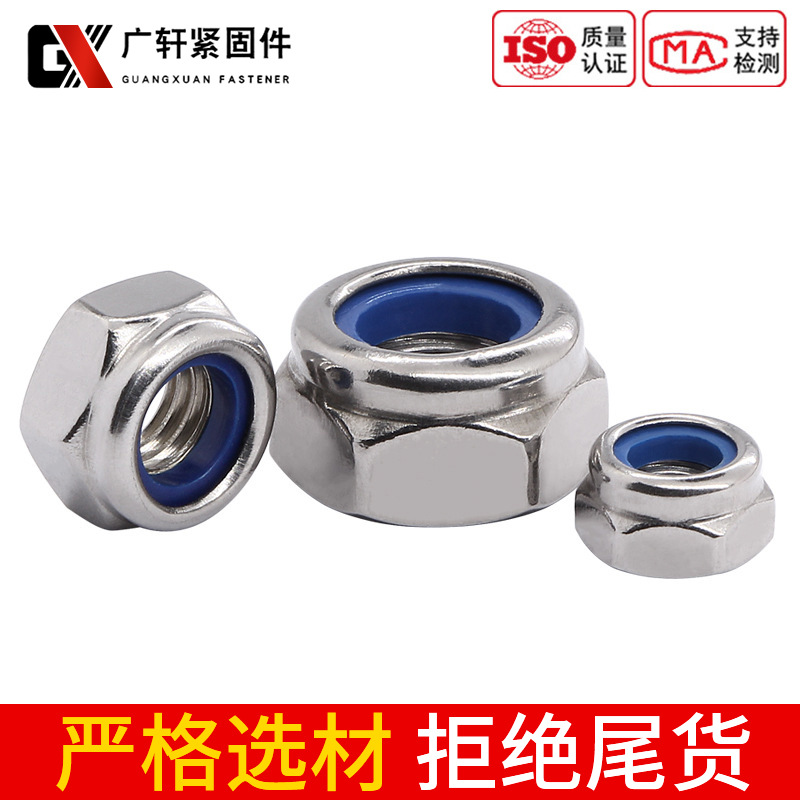
FAQ: Technical Selection Guide for Oxidation Blackening Thicken Locking Nut Technology
Q1: How to select the current density parameters for blackening by oxidation process?
A: Current density directly affects the thickness and uniformity of the oxide layer. Guangxuan's experience shows that for M20-M36 specifications of nuts, when the current density is controlled at 8-12A/dm², the oxide layer thickness can reach 8-12μm, with a thickness deviation ≤1.5μm. If the current density is less than 5A/dm², the slow oxidation rate may lead to疏松 film layers; more than 15A/dm² may cause localized overheating, leading to cracking of the film layer.
Q2: Will the thickened design affect the tenacity of the bolt cap?
A: Thicker material itself does not directly reduce toughness, but requires配合 heat treatment process. Guangxuan adoptsTempering treatment (860℃ quenching + 580℃ tempering)The nut core hardness reaches HRC28-32, with surface hardness of HRC40-45, ensuring both bearing capacity (tensile strength ≥1000MPa) and sufficient toughness (elongation at break ≥12%).
Q3: What is the difference between environmentally friendly oxidizing solution and traditional chromium-containing oxidizing solution?
A: Traditional oxidizing solution contains hexavalent chromium (Cr⁶⁺), which is highly toxic and the cost of waste liquid treatment reaches 5,000 yuan per ton; Guangxuan usesChrome-free manganese-based oxidizing solutionMainly composed of manganate, the waste liquid treatment cost is reduced to 800 yuan/ton, and it meets the RoHS 2.0 directive (limitation of 8 heavy metals such as cadmium, lead, and mercury ≤0.01%).
Summary: Technology-driven, Quality First
Technical upgrade of blackened and thickened locking nuts to take into accountProcess precision, material properties, and environmental complianceHandan Guangxuan Fastener Manufacturing Co., Ltd. controls the uniformity of the oxide layer thickness within ±1.5μm through pulse oxidation technology, fully automatic thread processing equipment, and a triple quality inspection system. The torque decay rate is ≤5%/year, and the waste liquid treatment cost is reduced by 84%, providing high reliability solutions for wind power, construction machinery and other industries. The company always adheres to the tenet of "reliable quality and customer-oriented," supports custom orders based on customer-provided drawings and samples, and welcomes customers from across the country to visit the factory for real-time inspections and explore the new boundaries of fastener technology.