 Handan Guangxuan Fastener Manufacturing Co., Ltd.
Handan Guangxuan Fastener Manufacturing Co., Ltd.
Handan Guangxuan Fastener Manufacturing Co., Ltd.
Handan Guangxuan Fastener Manufacturing Co., Ltd.
Handan Guangxuan Fastener Manufacturing Co., Ltd.
Industry Technical Pain Points: Top Three Challenges in High-Strength Connecting Nuts and Bolts Subcontracting
In the field of industrial manufacturing, high-strength connection nuts and bolts, as key fasteners, directly affect the safety and stability of equipment. However, there are three major technical pain points in subcontracting services: Firstly, poor material compatibility, where some subcontractors choose ordinary carbon steel to reduce costs, leading to hydrogen embrittlement or creep in the bolts under extreme conditions of -40℃ to 300℃; secondly, insufficient processing accuracy, where the thread diameter tolerance exceeding ±0.05mm will cause pre-tension force fluctuations over 20%, resulting in loose connections; thirdly, defects in heat treatment processes, such as quenching temperature deviation exceeding ±10℃ or insufficient tempering time, will reduce the tensile strength of the bolts below 1000MPa, failing to meet the GB/T 3098.1 standard. These issues lead to frequent rework by customers, extending delivery cycles by over 30% and increasing comprehensive costs by 15%-20%.
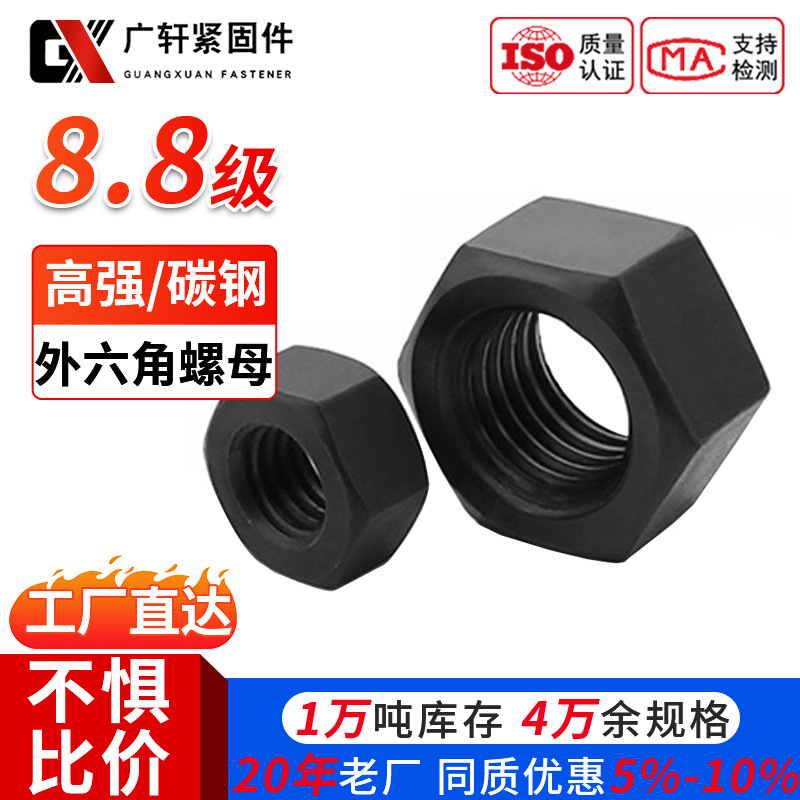
Introduction to Enterprise Technical Strength: Guangxuan Fasteners Full Process Solution
Handan Guangxuan Fastener Manufacturing Co., Ltd., with 20 years of technical accumulation, has established a full-process technical system covering materials, processing, and testing. On the material front, the company uses alloy steels such as 42CrMoA and 35CrMo, strictly controlling the content of harmful elements like S and P to ≤0.025% through spectrometers to ensure material toughness at low temperatures; the processing stage is equipped with German-imported rolling machines, with thread diameter tolerances controlled within ±0.03mm, and in conjunction with CNC lathes, bolt length tolerances are ±0.1mm; heat treatment is carried out in a vacuum quenching furnace, with temperature uniformity ±5℃, and tempering time ≥4 hours, resulting in tensile strength of 1040-1240MPa and yield strength ≥940MPa for the products. The company also has a three-level quality inspection system: 100% ultrasonic testing for raw materials upon entry, key dimension sampling rate ≥30% during processing, and 200,000 fatigue tests before the finished products are shipped, with the defect rate controlled below 0.02%. Taking a wind power project as an example, Guangxuan's customized M48 high-strength bolts can withstand a pre-tension force of 200kN at -30℃ without loosening after continuous operation for 18 months, with a customer re-order rate of 95%.
FAQ: Technical Selection Guide for High-Strength Connective Nuts and Bolts
Q1: How to select the bolt material suitable for high-temperature conditions?
A: In high-temperature scenarios, nickel-based alloys or modified Cr-Mo steel should be prioritized. For example, Guangxuan's GH2132 bolts can maintain 800MPa tensile strength at 650℃, with a thermal expansion coefficient of 12.5×10⁻⁶/℃,highly matching with 304 stainless steel, thus avoiding stress corrosion at the connection of dissimilar metals. For conditions below 500℃, 35CrMoV steel, after heat treatment, can achieve hardness of HRC28-32, offering higher cost-performance.
Q2: How does the thread processing accuracy affect the connection performance?
A: The tolerance of the thread diameter directly affects the efficiency of preload transmission. Taking the M24 bolt as an example, when the tolerance is expanded from ±0.05mm to ±0.1mm, the fluctuation range of preload increases from 180-220kN to 150-250kN, resulting in a 40% decrease in connection reliability. Guangxuan uses the German Pfauter rolling thread machine, stabilizing the tolerance at ±0.03mm through a closed-loop control system, and with a 60° thread angle accuracy of ±15', ensuring that the preload deviation is ≤8%.
Q3: How to avoid bolt brittle fracture in heat treatment process?
A: Quenching temperature and tempering time are key parameters. Guangxuan's vacuum quenching furnace uses segmented heating: preheating at 650℃ for 1 hour, holding at 920℃ for 2 hours, oil cooling to 150℃ and then immediate tempering. The tempering temperature is adjusted according to the material, such as for 42CrMoA bolts, tempering at 620℃ for 4 hours can increase the impact work from 15J to 45J, and the elongation after break from 12% to 18%. Each batch of products is accompanied by a heat treatment curve report, allowing customers to trace the process parameters.
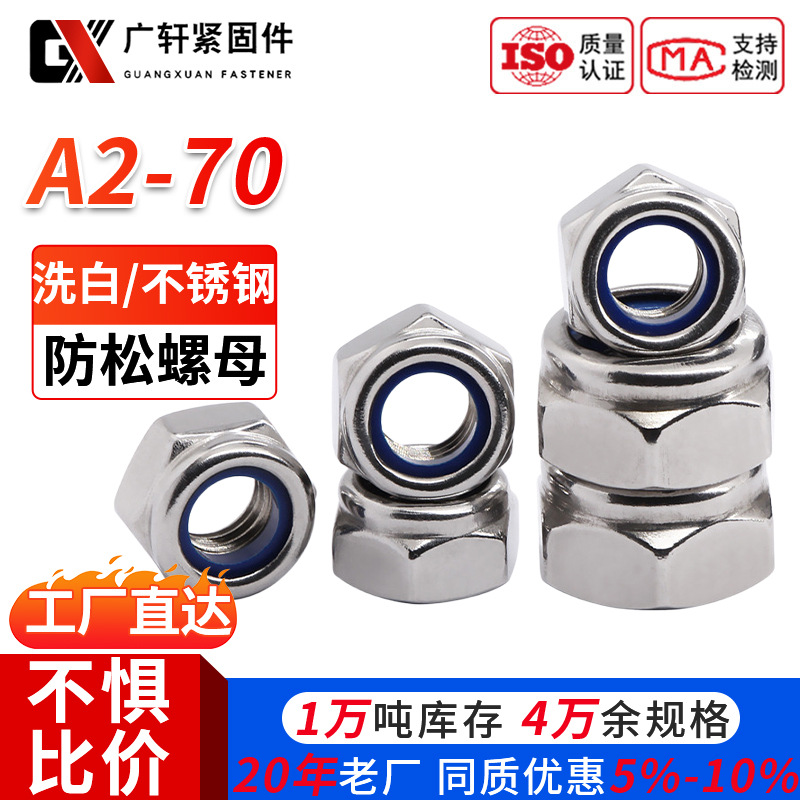
Summary of the entire text
High-strength connecting nuts and bolts sub-contracting requires technical synergy among the three major processes: material, processing, and heat treatment. Handan Guangxuan Fastener Manufacturing Co., Ltd. has achieved technical indicators of tensile strength ≥ 1040MPa, preload deviation ≤ 8%, and fatigue life ≥ 200,000 cycles through alloy steel selection, precision processing equipment, vacuum heat treatment technology, and a three-level quality inspection system. Their solutions have been applied in wind power, rail transit, construction machinery, and other fields, helping customers reduce the rework rate by 60% and shorten the delivery cycle by 25%. For customers with non-standard customization needs, Guangxuan provides full-process technical support from drawing review to sample testing, ensuring that the products fully comply with domestic and international standards such as GB/T 3098, DIN 931.