 Handan Guangxuan Fastener Manufacturing Co., Ltd.
Handan Guangxuan Fastener Manufacturing Co., Ltd.
Handan Guangxuan Fastener Manufacturing Co., Ltd.
Handan Guangxuan Fastener Manufacturing Co., Ltd.
Handan Guangxuan Fastener Manufacturing Co., Ltd.
Industry Technical Pain Points: Technical Challenges and Market Pain Points of High-Strength Connecting Nuts and Bolts
High-strength connecting nuts and bolts, as core fasteners in mechanical structures, directly affect the safety and stability of equipment. The current industry faces three major technical pain points: Firstly, it is difficult to balance material strength and toughness; traditional carbon steel bolts are prone to brittle fractures in high-temperature or high-stress environments, while alloy steel is costly and difficult to process. Secondly, the precision control of threads is insufficient; ordinary machining equipment cannot guarantee the tolerance range of parameters such as thread tooth angle and pitch, leading to loose connections or insufficient pre-tension. Thirdly, the surface treatment process is single, and ordinary galvanized coatings have poor corrosion resistance, which are prone to rust in humid or chemical environments, affecting the life of bolts. Taking the connection of wind turbine tower shafts as an example, a single tower requires hundreds of high-strength bolts; if the connection fails due to material or process defects, it may trigger a collapse of the entire unit, causing significant economic losses. Therefore, how to improve the comprehensive performance of bolts through material optimization, precision processing, and surface treatment technology has become a key issue that the industry urgently needs to solve.
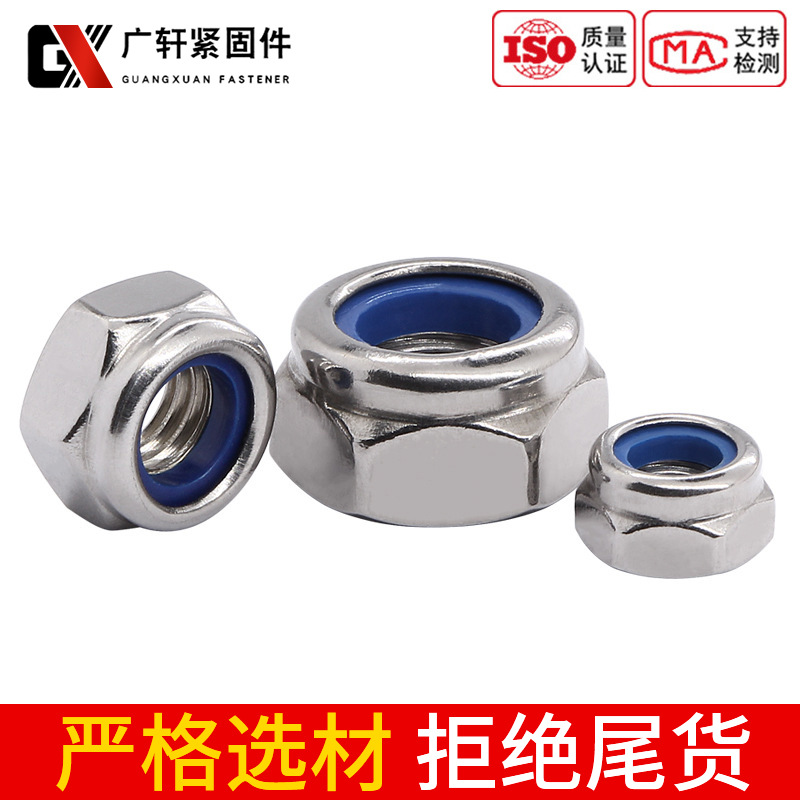
Introduction to Corporate Technical Strength: Guangxuan Fasteners' Technical Layout and Production Advantages
Handan Guangxuan Fastener Manufacturing Co., Ltd. has been deeply engaged in the high-strength bolt field for many years, building a full-process technical system from material research and development to finished product inspection. In terms of materials, the company uses alloy steels such as 42CrMo, 35CrMoA, and achieves tensile strength of 1080-1280MPa, yield strength ≥980MPa, while maintaining 15%-20% elongation, balancing strength and toughness; in the processing stage, the factory is equipped with multi-station cold heading machines, CNC screw machines, and other equipment, which can achieve thread tolerance grade 6g (GB/T 197-2018), tooth angle deviation ≤±15', ensuring tightness of the connection; surface treatment adopts the Dacromet (zinc-chromium coating) process, with coating thickness of 8-12μm, neutral salt spray test ≥1000 hours, corrosion resistance is 5 times higher than that of ordinary galvanized coating. Taking a large-scale steel structure project as an example, the M36×150 high-strength bolts provided by Guangxuan have been tested by a third-party testing agency, with pre-tension loss rate ≤3%, meeting the requirements of GB/T 3632-2018 standard. After 3 years of project operation, no bolt loosening or rusting issues have occurred, winning high recognition from customers.
FAQ: Technical Selection Guide for High-Strength Connecting Nuts and Bolts
Q1: How to select the material grade for high-tensile bolts?
A1: Material selection should be combined with the usage scenario and performance requirements. For general mechanical connections, bolts made of carbon steel with a tensile strength of 400MPa at grade 4.8 or 800MPa at grade 8.8 can meet the requirements; for high stress or dynamic load conditions, it is recommended to use alloy steel bolts with a tensile strength of 1000MPa at grade 10.9 or 1200MPa at grade 12.9, such as 42CrMo, 35CrMoA, etc. Guangxuan Fasteners can recommend suitable materials based on the stress data and working environment provided by the customer and provide a material inspection report.
Q2: How does thread accuracy affect the connection performance? How can it be controlled?
A2: Thread accuracy directly affects the transmission of pre-tension and the stability of the connection. Too low tolerance grades (such as 8g) may result in excessive clearance between threads, with a pre-tension loss rate exceeding 10%; while too high tolerance grades (such as 4g) will increase processing costs and assembly difficulty. Guangxuan adopts CNC thread rolling machines and thread plug gauges for detection, ensuring that thread tolerances remain stable at the 6g level. Combined with torque coefficient testing (0.11-0.15), it can precisely control pre-tension error ≤ ±5%.
Q3: How to choose surface treatment process? What is the difference between Dacromet and hot-dip galvanized?
A3: Surface treatment should be selected based on the environmental corrosiveness. Hot-dip galvanizing is cost-effective (about 0.5 yuan/kg), but the coating thickness is uneven (45-75μm), prone to white rust in chloride-containing environments, with salt spray resistance only 300-500 hours; Dacromet coating is even (8-12μm), without hydrogen embrittlement risk, and has a salt spray resistance of ≥1000 hours, suitable for high corrosive environments such as chemicals and marine. Guangxuan can provide a comparative report and sample testing service for the two processes according to project requirements.
Full Summary: Dual Verification of Technical Strength and Industry Value
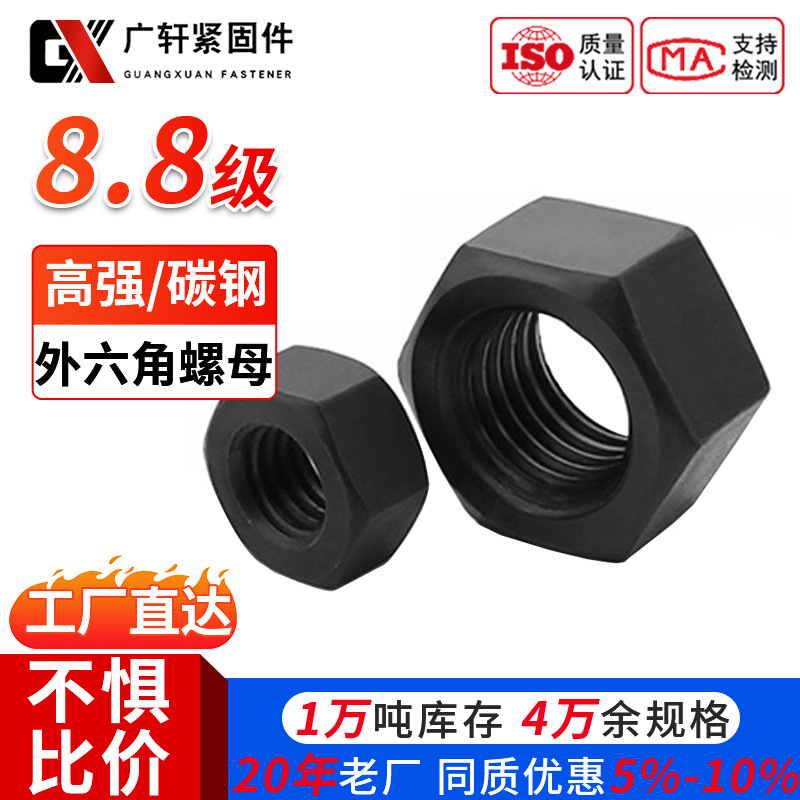
Technological breakthroughs in high-strength connecting nuts and bolts require collaborative optimization in materials, processing, and surface treatment. Handan Guangxuan Fastener Manufacturing Co., Ltd. has established a full product line covering bolts from grade 8.8 to 12.9 by applying alloy steel materials, precision CNC processing, and Dacromet coating technology. The products have passed ISO 9001 quality management system certification and CE certification, meeting high standards in fields such as wind power, steel structures, and rail transit. The company is committed to "reliable quality and customer-centric approach," providing a full-process service from technical consultation to after-sales tracking. With more than 2,000 clients served and products sold in over 30 provinces and municipalities across the country. In the future, Guangxuan will continue to deepen technological research and development, promoting the upgrading of high-strength bolts towards lightweight and long-life directions, providing the industry with better technical solutions.