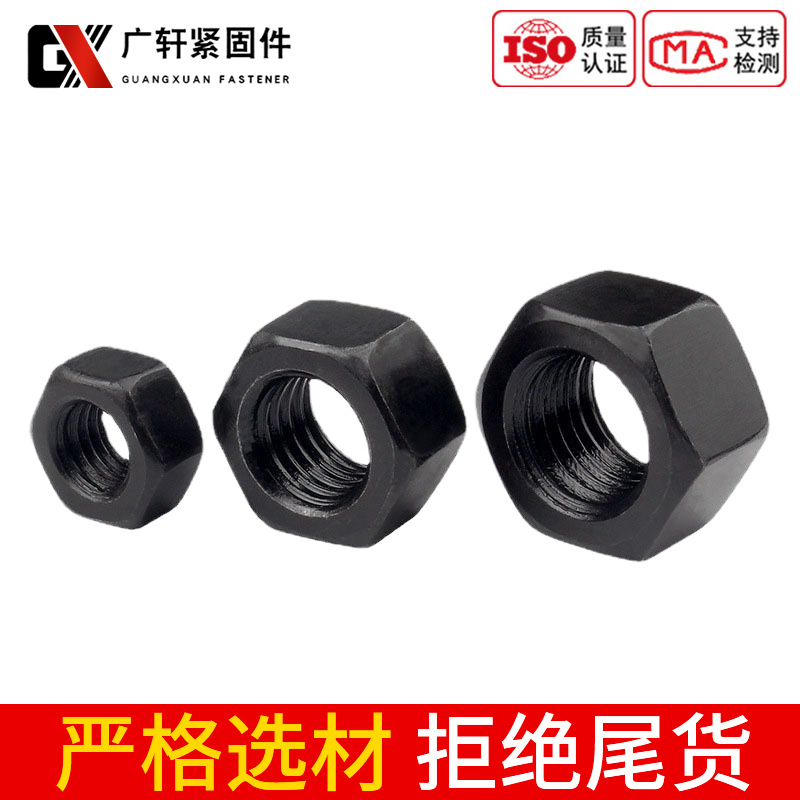
Handan Guangxuan Fastener Manufacturing Co., Ltd.
Handan Guangxuan Fastener Manufacturing Co., Ltd.
Handan Guangxuan Fastener Manufacturing Co., Ltd.
Handan Guangxuan Fastener Manufacturing Co., Ltd.
Handan Guangxuan Fastener Manufacturing Co., Ltd.
Industry Technical Pain Points: Reliability Challenges in High-Strength Fasteners
High-strength connecting nuts and bolts, as critical fasteners in fields such as machinery, construction, and energy, directly affect the safety and durability of engineering structures. The industry currently faces three major technical challenges: Firstly, the balance between material strength and toughness is difficult, as traditional processes struggle to achieve high strength (such as 10.9, 12.9 grades) and fatigue resistance, leading to bolt fractures under long-term vibration or impact loads. Secondly, insufficient machining accuracy, with either too large or too small thread fit gaps, can cause loss of preload control, resulting in loose connections or thread galling. Thirdly, defects in heat treatment processes, such as improper quenching temperature and time control, can lead to uneven surface hardness or reduced core toughness, affecting the overall performance of the bolts. In addition, the demand for non-standard and special-shaped parts has surged, but most manufacturers lack customized production capabilities, resulting in long delivery cycles and high costs. These issues not only increase engineering risks but also restrict the industry's development towards high-end and refined directions.
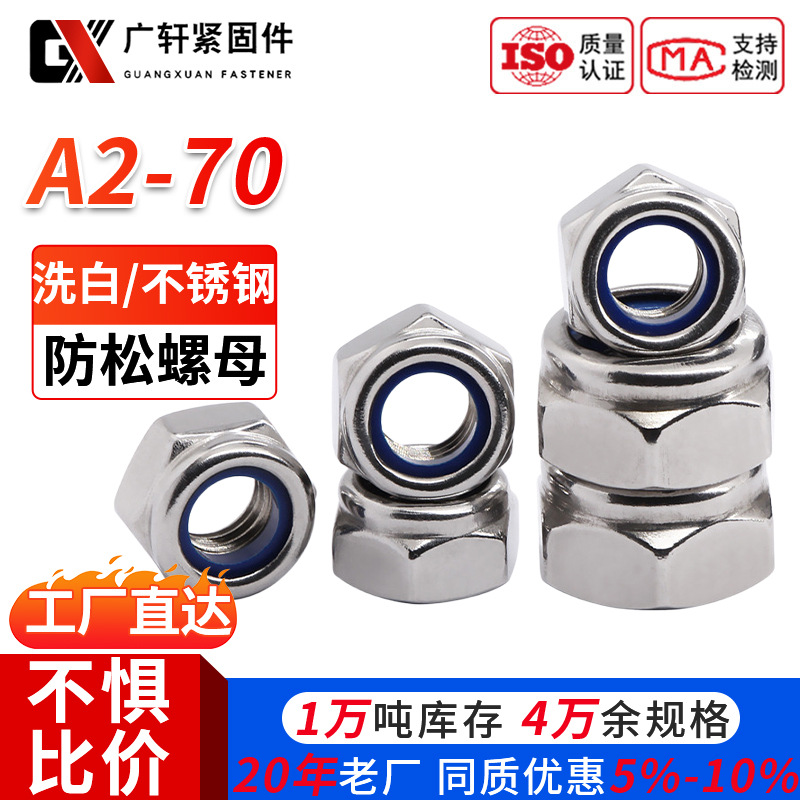
Introduction to Corporate Technical Strength: Guangxuan Fasteners' Full-process Technical Layout
Handan Guangxuan Fastener Manufacturing Co., Ltd., with over 20 years of industry dedication, has established a comprehensive full-process technology system covering material selection, precision processing, heat treatment optimization, and quality inspection. On the material front, the company uses alloy steels such as 42CrMo, 35CrMoA, and strictly checks element content (e.g., C content 0.38%-0.45%, Cr content 0.9%-1.2%) through spectrometers to ensure basic material performance meets standards; in the processing phase, multi-station cold heading machines and CNC thread rolling machines are equipped to achieve thread precision at the 6g grade of GB/T 197-2018 standard, with spacing control within 0.05-0.15mm, effectively enhancing preload stability. The heat treatment process uses a vacuum quenching furnace, precisely controlling quenching temperature (850-880℃), holding time (30-45 minutes), and tempering temperature (480-520℃) to achieve bolt surface hardness of HRC32-36 and core hardness of HRC28-32, balancing high strength and impact resistance. In addition, the company has established a three-level quality inspection system: raw materials are tested for tensile strength (≥1080MPa), yield strength (≥940MPa) upon entry; semi-finished products are subjected to metallographic analysis to ensure grain size ≤8; before product delivery, salt spray tests (480 hours without rust) and fatigue tests (10^7 cycles without fracture) are conducted to strictly control product lifespan. Currently, the company has a daily production capacity of 50,000 high-strength bolts and 30,000 nuts, and can undertake customizing non-standard special-shaped parts in M6-M100 specifications, with delivery cycles shortened to 7-15 days.
FAQ: Technical Selection Guide for High-Strength Connecting Nuts and Bolts
Q1: How to select high-strength bolts suitable for vibration environments?
A1: In vibration environments, it is recommended to prioritize bolts with excellent fatigue resistance. Guangxuan Fasteners suggests using 10.9 or 12.9 grade alloy steel bolts (such as 42CrMo), whose heat treatment process ensures a balance between core toughness (断面收缩率≥50%) and surface hardness (HRC32-36). In addition, using spring washers or double nut anti-loosening structures in conjunction can further enhance the reliability of the connection. Measured data shows that such bolts, after continuous operation in wind power equipment (vibration frequency 0.5-20Hz) for 5 years, the pre-tension loss rate is less than 15%.
Q2: What is the customization process for non-standard special-shaped bolts?
A2: Guangxuan Fasteners offers a full-process customized service including "submit drawings and samples - 3D modeling - process review - sample trial production - mass production." Customers need to provide specifications of bolts (such as length, diameter, thread type), performance requirements (such as strength grade, corrosion resistance), and application scenarios (such as temperature range, load type). The technical team will complete the process feasibility analysis within 48 hours. The samples will pass salt spray tests (480 hours), tensile tests (≥1.5 times the rated load), and other inspections before entering mass production. Currently, the company has successfully customized complex parts such as high-strength bolts for tower cranes (M48×300mm) and non-standard pin shafts for nuclear power equipment (diameter 80mm, length 1200mm).
Q3: How to control the procurement cost of high-strength bolts?
A3: Cost control requires optimization from three aspects: materials, processes, and scale. Guangxuan Fasteners reduces customer costs through the following methods: Firstly, replacing imported materials with high-quality domestic alloy steel, reducing the cost per piece by 20%-30%; secondly, optimizing the heat treatment process, reducing quenching energy consumption by 15% while reducing the scrap rate (from 3% to 0.5%); thirdly, supporting bulk purchases (each batch ≥ 1000 pieces) with tiered pricing, offering better deals for larger quantities. For example, a wind power company purchasing M36×200mm 10.9-grade bolts, through bulk ordering and process optimization, the cost per piece was reduced from 45 yuan to 32 yuan, saving over 2 million yuan in procurement costs annually.
Technological drive, quality foundation
The technical upgrade of high-strength connecting nuts and bolts requires comprehensive optimization of the entire chain covering materials, processes, and quality inspection. Handan Guangxuan Fastener Manufacturing Co., Ltd. has effectively addressed the pain points in the industry such as the balance between strength and toughness, insufficient processing accuracy, and heat treatment defects through standardized production processes, precision processing equipment, and full-process quality control. With its rapid response to non-standard customization capabilities, the company provides high-reliability fastener solutions for clients in the mechanical, construction, and energy sectors. In the future, the company will continue to deepen technological research and development, expand the application of high-strength bolts in extreme environments (such as high temperature, low temperature, and strong corrosion), and help the industry move towards higher standards.