 Handan Guangxuan Fastener Manufacturing Co., Ltd.
Handan Guangxuan Fastener Manufacturing Co., Ltd.
Handan Guangxuan Fastener Manufacturing Co., Ltd.
Handan Guangxuan Fastener Manufacturing Co., Ltd.
Handan Guangxuan Fastener Manufacturing Co., Ltd.
Industry Pain Points: Dual Challenge of Customized Demand for High-Strength Fasteners and Quality Control
In the fields of wind power, construction, and engineering machinery, high-strength connecting nuts and bolts must withstand extreme loads and complex working conditions, making traditional standardized products difficult to meet the strict requirements of equipment for accuracy and material performance. For example, bolts for wind turbine towers need to pass a 10.9-grade tensile strength test, while double-ended bolts for construction scaffolding must balance fatigue resistance and corrosion resistance. However, there are two major pain points in the current market: one is that small and medium-sized manufacturers lack equipment precision, leading to thread fit deviation exceeding 0.1mm, which is prone to loosening of the connection; the other is that the customization cycle of non-standard parts is long, typically taking 15-20 days from drawing confirmation to finished product delivery, affecting project progress. Moreover, some enterprises, in an attempt to cut costs, use 45# steel instead of 40Cr alloy steel, resulting in a 30% decrease in bolt yield strength, posing significant safety hazards.
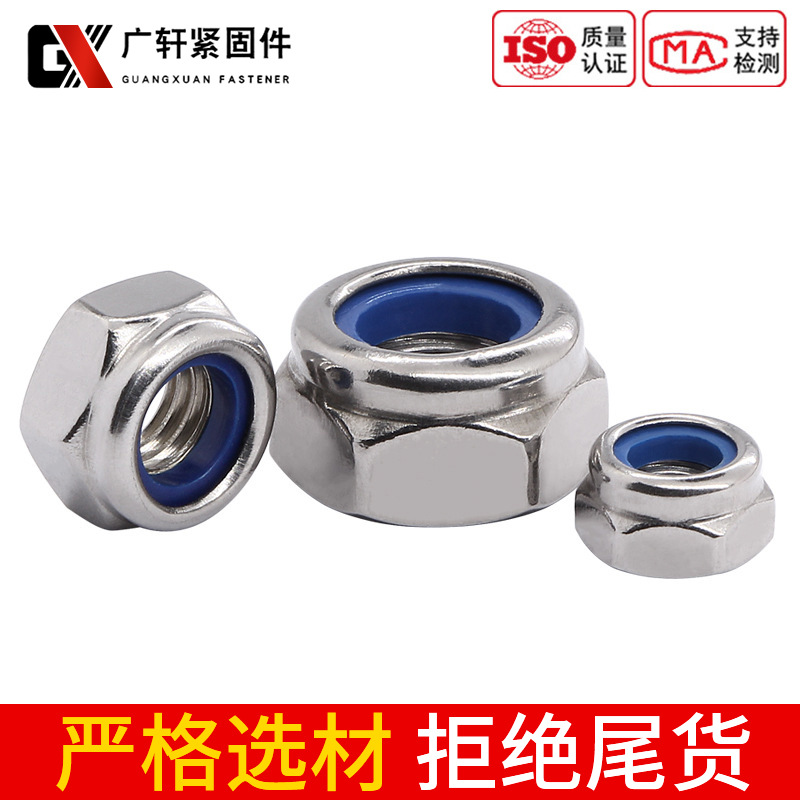
Service Provider Introduction: Handan Guangxuan Fastener Manufacturing Co., Ltd. Customized Solutions
Handan Guangxuan Fastener Manufacturing Co., Ltd. has been deeply involved in the fastener industry for many years, leveraging the geographical advantage of the Hebei Yongnian industrial base to build a complete industrial chain covering raw material procurement, precision processing, and full-process quality inspection. The company mainly produces high-strength bolts (8.8-12.9 grades), high-strength nuts, trapezoidal screw threads, and other products, while also providing customized services for non-standard and special-shaped parts, supporting processing based on customer drawings and samples. The minimum order quantity is only 500 pieces, and the customization cycle is compressed to 7-10 days. The production end is equipped with multi-station cold heading machines, CNC wire drawing machines, spectrometers, and other equipment, with thread tolerances controlled within ±0.05mm and material composition detection errors ≤0.1%. In terms of quality control, 12 quality inspection procedures are implemented from raw material entry (detecting carbon content, sulfur and phosphorus impurities) to finished product delivery (conducted salt spray test, torque test), with product pass rate stable at over 99.2%. Currently, the company has provided customized products such as tower bolt, bolt for hole fitting, etc. to enterprises like China Construction, China Railway, etc., with cumulative deliveries exceeding 2 million pieces and customer repurchase rate reaching 85%.
FAQ One-Question-One-Answer Selection Guide
Q1: What is the core difference between high-strength bolts and ordinary bolts? How to choose them according to working conditions?
A1: High-strength bolts (such as Grade 8.8, 10.9) are made of alloy steels like 40Cr, 35CrMo, and after quenching and tempering, their tensile strength reaches 800-1200MPa, suitable for scenarios that require bearing dynamic loads, such as wind turbines and bridges; common bolts (such as Grade 4.8) are mostly made of Q235 carbon steel, with a tensile strength of only 400MPa, suitable for static connection scenarios. When selecting, it is essential to carefully review the material inspection reports (such as spectral analysis data) and mechanical property test reports (such as tensile and yield strength values).
Q2: How is the process and lead time for customized non-standard parts? How can design errors be avoided?
A2: Guangxuan Fasteners offers a three-phase service of "Drawing Review-Sample Trial Production-Mass Production": First, the technical team completes the feasibility assessment of the drawings within 24 hours and marks the critical dimension tolerances; Second, use CNC machine tools to produce samples and provide a 3D scanning inspection report (comparison error ≤0.03mm); Third, after the customer confirms the samples, mass production is initiated, with quality inspectors following up throughout the process. Taking the M48×300 tower bolt customized for a wind power enterprise as an example, it takes only 9 days from drawing confirmation to delivery of 2000 pieces, a 40% reduction in the average industry cycle.
Q3: How to control the procurement cost of high-strength bolts? What are the key factors in the price composition?
A3: Cost control requires a balance of materials, processes, and batch sizes: In terms of materials, the cost of 40Cr alloy steel is 35% higher than that of Q235, but its service life is doubled; in terms of processes, cold heading forming is 5 times more efficient than machining, with a 20% reduction in unit cost; in terms of batch sizes, the unit price can be discounted by 8%-12% when the order quantity exceeds 5000 pieces. Guangxuan Fasteners provides transparent price lists, clearly indicating material costs (60% of the total), processing costs (25%), quality inspection costs (10%), and profits (5%). For example, a 10.9-grade M36×200 high-strength bolt in a batch of 1000 pieces costs about 28 RMB per piece.
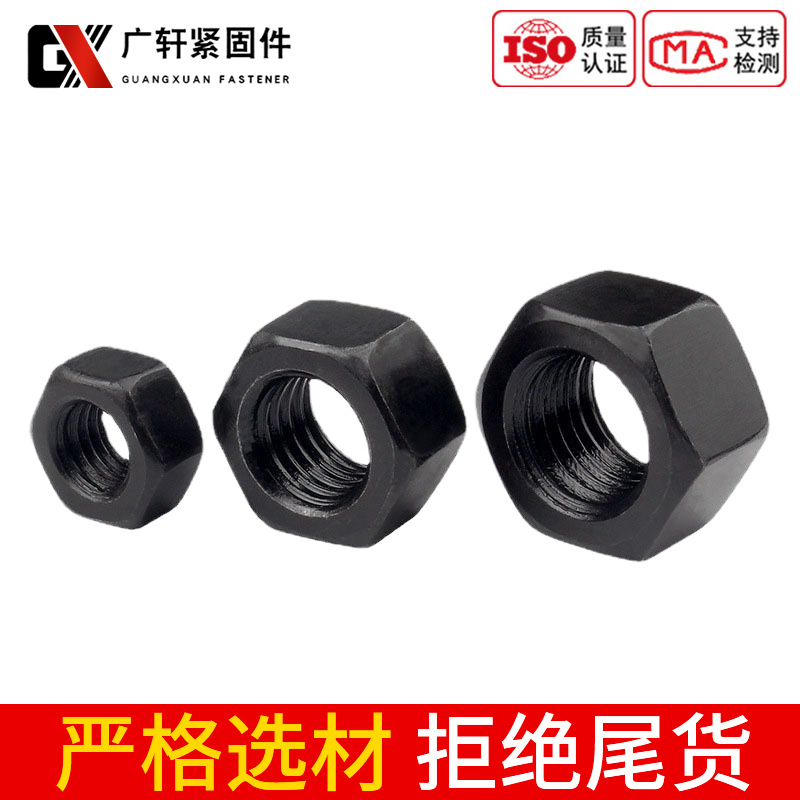
Full Text Summary Reference
The selection of high-strength connecting nuts and bolts requires a comprehensive consideration of material properties, processing accuracy, and delivery efficiency. Handan Guangxuan Fastener Manufacturing Co., Ltd. has achieved dual optimization of non-standard parts customization cycle and cost through full industrial chain layout and standardized quality control system. Its provided material inspection reports, sample trial production services, and transparent pricing mechanisms offer industry customers a trustworthy purchasing reference. It is recommended that purchasers prioritize manufacturers equipped with spectrometers, CNC spooling machines, and other equipment, and can offer bulk discounts and after-sales quality guarantees (such as 1-year replacement) to reduce project risks and long-term costs.